
A Raleigh-based builder’s perspective on durability, climate, and long-term performance in high-end pool construction
In luxury pool design, materials often drive the conversation. Stone, tile, finishes, and decking are usually chosen early, guided by photos, samples, and first impressions.
But in Raleigh and throughout North Carolina what looks good on day one does not always perform well over time.
At LYFE Pools, material selection is not driven by trends or showroom appeal alone. It is informed by climate, soil conditions, water chemistry, and long-term exposure to heat, moisture, and seasonal movement.
The goal is not just to build a beautiful pool but one that continues to look and function as intended years after installation.
We have deep relationships with our material providers and are engaged with the quality and relationships that create amazing projects.
The Gap Between Appearance and Performance
Luxury pool materials are often marketed visually. Smooth finishes, dramatic color variation, and exotic stone can photograph exceptionally well, especially in controlled environments.
In real-world conditions and especially in the Raleigh area materials are subjected to:
High summer heat and UV exposure
Freeze-thaw cycles in winter
Frequent rain and moisture saturation
Chemically treated water and splash-out
Soil movement beneath hardscape
Over time, these forces reveal the difference between materials selected for appearance and those selected for performance.
Natural Stone: Timeless When Chosen Correctly
Natural stone remains a cornerstone of high-end pool design, particularly in custom homes throughout Raleigh and the Triangle. When chosen correctly, it can feel timeless, architectural, and refined.
However, not all stone behaves the same in pool environments.
We use Marmiro Stones as a trusted supplier for most of our natural stone. Used not just in the patio but also for waterline tile and other pool details.
What Performs Well
Stones with low porosity, consistent density, and proven exterior performance tend to age gracefully. Honed or lightly textured finishes reduce slip risk and weather more evenly.
When properly selected and detailed, natural stone offers:
Long-term dimensional stability
Predictable weathering
Compatibility with restrained, modern designs
What Often Fails Quietly
Highly porous stones, stones with excessive mineral content, or materials not rated for freeze-thaw conditions often show early signs of distress in North Carolina’s climate. Common issues include:
Spalling and surface flaking
Discoloration from moisture absorption
Cracking at expansion points
Stone that performs well in dry or mild climates may struggle in Raleigh’s humidity and seasonal temperature swings.
It’s important that you choose the right type of stone for the right kind of application. Not just the right stone but also the right finish. A travertine may be a great patio stone but should never be in the water as it can’t handle the freeze and thaw conditions. A sandblasted marble may be a great patio but the porous nature of the finish will be terrible if constantly wet and should have a closed porous finish like a leathering. A small distinction with major consequences.
Porcelain Pavers: Precision and Predictability
Porcelain has become increasingly popular in luxury pool environments and for good reason.
High-quality porcelain pavers offer:
Extremely low water absorption
Excellent resistance to freeze-thaw cycles
Color consistency over time
Dimensional precision
In the Raleigh area, porcelain can be an excellent choice for modern and transitional pool designs, particularly where clean lines and uniform surfaces are desired.
That said, porcelain is not universally superior. It requires:
Proper substrate preparation
Correct setting systems
Thoughtful edge detailing
When poorly installed, even the best porcelain can fail. Performance is always a product of material plus method.
One of the major issues with porcelain in the North Carolina area is the warm summers can create very hot surfaces as porcelain is very dense. Considering the exact installation location and type is very important.
Coping Profiles: Small Detail, Big Consequences
Coping is one of the most overlooked performance elements in pool construction.
In luxury pools, coping must handle:
Constant wet-dry cycling
Thermal expansion and contraction
Structural movement from the shell and surrounding deck
Profiles with excessive ornamentation or thin edges often become failure points over time. In Raleigh’s climate, simpler profiles with clean geometry tend to perform better.
At LYFE Pools, we favor coping designs that:
Allow for movement
Shed water effectively
Integrate cleanly with modern and European-inspired architecture
This is one area where restraint almost always outperforms decoration.
Knowing when to use thickness, Bullnose vs. Straight edge and the right application materials is CRITICAL! We use Laticrete colored to match each stone so we get the right material for application and one that completes a seamless look.
Interior Pool Finishes: Longevity Is in the Details
Interior finishes are often marketed by appearance alone, but their performance depends heavily on installation quality and startup chemistry.
Plaster, Quartz, and Pebble Finishes
Each finish type has its place, but none are maintenance-free. Longevity is influenced by:
Surface preparation
Application technique
Proper curing and hydration
Controlled startup water chemistry
In Raleigh, where seasonal water chemistry can vary, improper startup is one of the leading causes of premature finish degradation regardless of finish type.
A finish that looks flawless at installation can deteriorate quickly if chemistry is rushed or unmanaged during the critical early weeks.
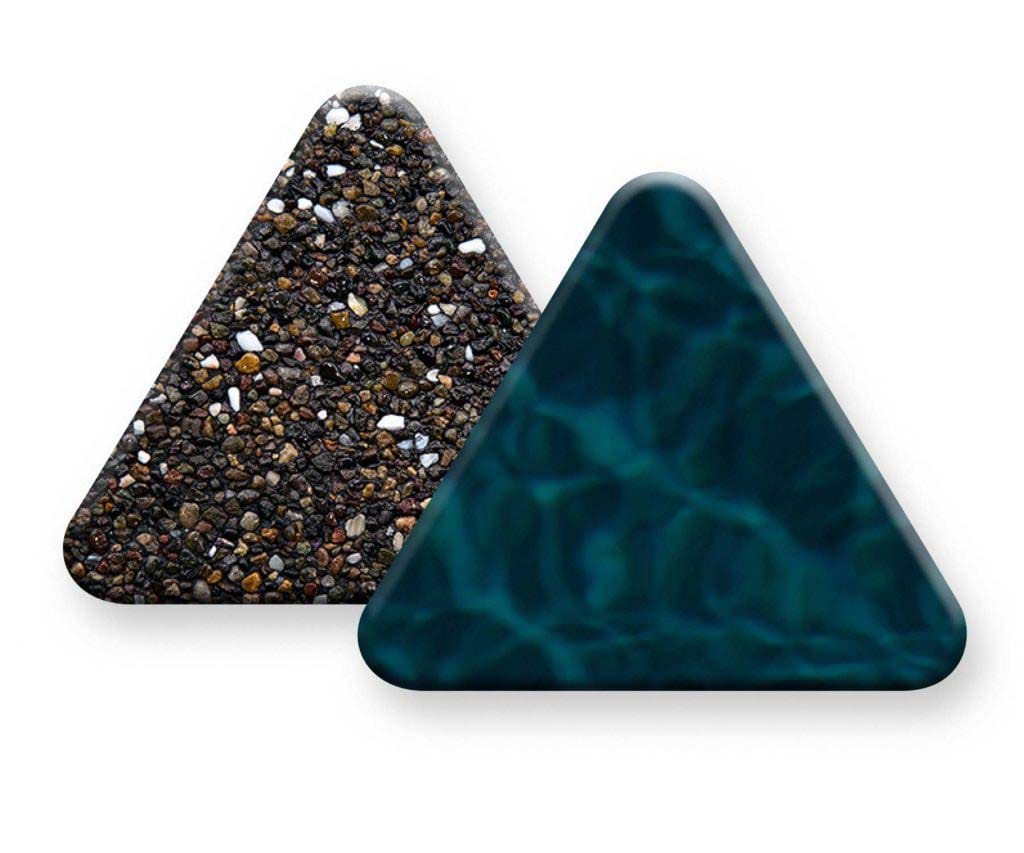
LYFE pools is one of the few Elite PebbleTec plaster builder in the Raleigh area. We use only the best materials in the pool and Pebbletec is a leader in this area that we trust and are trusted by.
Water Chemistry and Material Compatibility
One of the most misunderstood aspects of pool material performance is the relationship between finishes, stone, and water chemistry.
Aggressive or poorly balanced water can:
Etch plaster finishes
Accelerate stone deterioration
Damage grout and tile
Shorten equipment lifespan
Luxury pools require materials that are compatible not only with design intent, but with realistic maintenance practices over time. This is especially important for homeowners who value low-friction ownership rather than constant adjustment.
LYFE pools includes a 30 days start up to ensure the plaster and water chemistry come to you refined and ready to use.
Decking and Hardscape: The Extension of the Pool System
In high-end pool projects, the surrounding hardscape is as important as the pool itself.
In the Raleigh market, decking materials must handle:
Moisture from rain and splash-out
Heat exposure in summer
Seasonal movement of underlying soils
Large-format stone and porcelain with proper jointing and drainage tend to perform best. Tight tolerances and clean layouts reduce long-term movement and visual disruption.
Our patios are installed with drainage in mind with the right application with the right stone layout that we determined during the design phase.
As with all materials, performance depends on preparation beneath the surface—not just what’s visible above it.
Why Material Selection Looks Different at LYFE Pools
At LYFE Pools, we approach material selection with a performance-first mindset.
Our process prioritizes:
Proven behavior in North Carolina’s climate
Compatibility with pool chemistry
Long-term maintenance reality
Architectural alignment with the home
We routinely advise against materials that look exceptional in photos but introduce unnecessary risk over time. A high-end pool should age quietly and gracefully—not demand constant intervention.
Common Questions About Luxury Pool Materials in Raleigh
Are natural materials still worth it in North Carolina?
Yes—when selected and detailed correctly. Performance depends on stone type, finish, and installation quality.
Is porcelain always better than natural stone?
Not always. Porcelain offers predictability, while stone offers character. The right choice depends on design goals and site conditions.
Why do some luxury pools look worn after just a few years?
In most cases, the issue is material compatibility, installation quality, or water chemistry—not the concept of luxury itself.
Can material problems be avoided entirely?
They can be dramatically reduced with informed selection, proper installation, and realistic maintenance planning.
Final Thought
Luxury is not defined by rarity or cost alone.
It is defined by how well something performs over time.
In pool construction—especially in Raleigh—materials that last quietly are the ones that truly earn the label “high-end.”